Too many contractors in Birmingham Alabama skip the site-specific ground motion study. They default to the IBC map values and call it done. That is a mistake. The geology here produces strong amplification in certain pockets. A generic code spectrum does not capture the soft clay layers under the city. We see this error repeatedly in mid-rise projects. A proper site response analysis captures the actual wave propagation through the local soil column. Without it, the design spectrum can be off by 30 to 50 percent. That means the structure may be under-designed for the real shaking. We combine this with a MASW survey to measure shear wave velocity directly in the field. That gives us the Vs30 value needed for NEHRP site classification. The result is a defensible design spectrum, not a guess.
The site-specific spectrum can shift the design base shear by 40 percent compared to the IBC default map values.
Methodology and scope
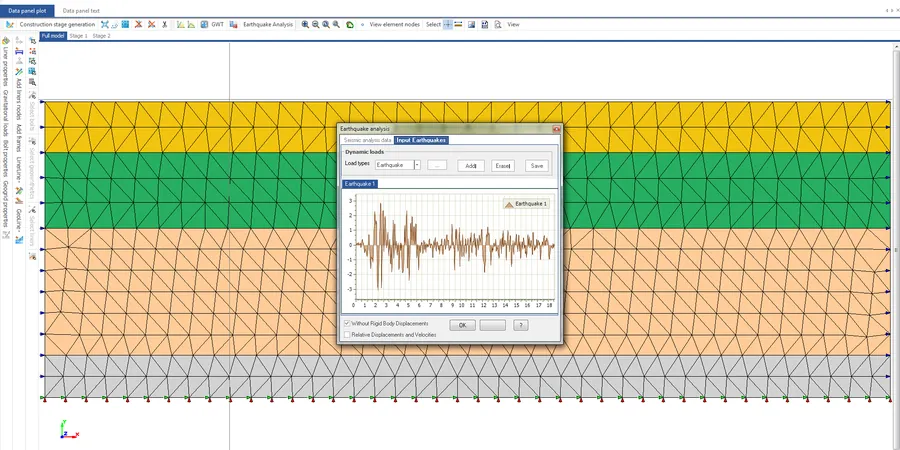
Birmingham Alabama sits on the Cahaba synclinorium with folded Paleozoic rocks overlain by residual clay and alluvial deposits along the valleys. The depth to competent rock varies from 15 to over 100 feet across the metro area. Groundwater sits shallow in the Valley Creek and Village Creek floodplains. These conditions create impedance contrasts that amplify seismic waves. The response spectrum shifts depending on the exact soil profile. We run one-dimensional equivalent-linear analysis using SHAKE or DEEPSOIL. The key inputs are the shear wave velocity profile, the modulus reduction curves, and the damping ratios. We use site-specific curves, not generic defaults. For projects near the Red Mountain fault zone, we also run a liquefaction triggering assessment since loose sands exist in the Cahaba River terraces. The whole process follows ASCE 7-22 Chapter 21 for ground motion hazard analysis. The output is a site-specific acceleration response spectrum and a set of acceleration time histories for structural analysis.
Technical reference image — Birmingham Alabama
Local considerations
ASCE 7-22 requires site response analysis for Seismic Design Categories D, E, and F. Birmingham Alabama falls mostly in SDC C and D per the 2023 IBC. The risk is that soft soils in the Lakeview and Avondale neighborhoods amplify the long-period motion. That hits mid-rise buildings hard. We have seen three- to five-story structures resonate with the site period. The result is non-ductile failure in columns and shear walls. The city code does not mandate site-specific analysis for SDC C. But the difference between a generic spectrum and a site-specific one can be the difference between a building that survives and one that gets red-tagged. We always recommend the analysis for any structure with an occupancy category III or higher.
We perform SHAKE/DEEPSOIL analyses using shear wave velocity profiles from MASW or downhole tests. The output includes acceleration response spectra, Fourier amplitude spectra, and time histories for structural input. We use modulus reduction and damping curves from the literature or site-specific resonant column tests. The analysis covers the full hazard range from 10%/50yr to 2%/50yr events.
02
Site-Specific Ground Motion Hazard Analysis
For critical facilities like hospitals and schools, we run a probabilistic seismic hazard analysis (PSHA) using the USGS NSHM data. We deaggregate the hazard to identify controlling earthquake scenarios. Then we select and scale ground motions to match the target spectrum. This service is required for SDC E and F sites and recommended for any structure over four stories in Birmingham Alabama.
When is a site response analysis required in Birmingham Alabama?
The IBC 2023 requires it for Seismic Design Categories D, E, and F. In Birmingham Alabama, most sites in SDC D fall along the Valley Creek floodplain where soft clays exist. We also recommend it for any structure with occupancy category III or IV, regardless of SDC. Schools, hospitals, and emergency response facilities should always get a site-specific study.
What is the difference between a site response analysis and a standard geotechnical report?
A standard report gives you bearing capacity and settlement estimates. A site response analysis tells you how the ground will shake during an earthquake. It produces a site-specific design spectrum and acceleration time histories. The structural engineer uses these to design the lateral force resisting system. Without it, the building uses the generic IBC spectrum, which may not match the actual soil behavior in Birmingham Alabama.
How does the soil in Birmingham Alabama affect the site response?
The residual clay over limestone creates a sharp impedance contrast. Seismic waves slow down in the clay and then speed up abruptly in the rock. This amplifies the motion at periods between 0.3 and 1.0 seconds. The alluvial sands in the Cahaba River valley can also liquefy during a M6.5+ event. The site response analysis captures these effects quantitatively.
How much does a site response analysis cost in Birmingham Alabama?
The cost ranges between US$1.410 and US$3.680 depending on the number of profiles and the complexity of the analysis. A single MASW line with one-dimensional analysis falls at the lower end. A full PSHA with multiple ground motion selections sits at the higher end. We provide a fixed-price quote after reviewing the project scope.